Most people book a mobile detailing service because they want their car to look and feel clean without losing a Saturday in the driveway. The challenge is that “full detail,” “premium wash,” and “complete interior” mean different things depending on the provider. After years of working alongside techs and auditing packages from shops and vans alike, I can tell you there’s a practical logic behind how mobile detailing is built. The work has to travel, water and power may be limited, and time windows are fixed. Good operators design packages that respect those constraints while protecting paint, fabric, and trim in the real world, not just for photos.
This guide unpacks what’s typically included at each tier, where the trade-offs live, and how to match add-ons like paint correction, ceramic coating, or headlight restoration to your vehicle’s condition and use. The same principles apply whether you’re booking car detailing for a daily driver, marine detailing for a center console boat, or RV detailing before a long trip.
The logic behind mobile detailing packages
A shop has a controlled bay, pressurized hot water, and a wall of chemicals at arm’s reach. A mobile detailer has to bring every drop, pad, and towel, manage runoff responsibly, and finish on schedule in whatever the weather permits. That reality shapes packages. Base tiers lean on safe contact washes and interior resets. Mid tiers add decontamination and light machine work. Top tiers focus on paint correction and long-term protection like ceramic coating.
Time allotment is the backbone. A sedan “basic” slot often budgets 1.5 to 2 hours for one paint correction otsmobile.com tech. A comprehensive interior on a three‑row SUV can stretch to 3 to 4 hours. If pet hair and kid snacks are fused into carpet fibers, the same job might double in time because agitation, extraction, and drying are the bottlenecks. When you scan a package menu, read it like a time map with tasks grouped by system: exterior, interior, wheels and tires, glass, trim, and protection.
Exterior care in a standard mobile detail
A proper exterior starts long before the mitt touches paint. Expect a pre‑rinse or touchless foam dwell to soften contamination. Many mobile teams rely on rinseless or low‑water systems when local regulations or a customer’s site make runoff tricky. Done right, these products encapsulate dirt and reduce marring, but they place a premium on clean towels and careful technique.
Wheel and tire work happens first. Brake dust is abrasive and lives best on its own towels and brushes. A standard package usually includes a face and barrel brush scrub, tire scrubbing, and a water‑based dressing. Glossy solvent dressings look dramatic but sling onto doors and attract dust, so good operators step that back. Wheel coating sits in the add‑on category because it’s a decon and coating job of its own, but you will see “spray sealant on wheels” as a small protection bump in mid tiers.
Decontamination might be included or optional. Chemical iron removers dissolve embedded ferrous particles. Clay bars or synthetic clay mitts shear off bonded contaminants the eye can’t see, like overspray or rail dust. If a detailer clays without following with at least a light polish, expect a minor increase in micro‑marring on softer paints. That’s a calculated trade. Many standard packages skip clay for that reason, especially on new or well‑kept cars.
Drying, where a lot of paint damage happens, is a tell. In a good package, you’ll see forced air around mirrors and trim, plush towels, and a drying aid or sealant to reduce friction. Finally, there’s a short‑term protection layer. Basic tiers often use a spray sealant good for four to eight weeks. Mid tiers step to polymer sealants or graphene and SiO2 sprays that last two to three months, sometimes more with sheltered parking. True ceramic coating is separate. Expect a dedicated prep and application block with warranties and maintenance instructions.
Interior basics that matter more than the product label
On interiors, the best mobile detailing is methodical: dust, vacuum, clean, protect, and dry. That sequence manages moisture and prevents using cleaners as a crutch for poor mechanical agitation. A “complete interior” should include a thorough vacuum using crevice and pet hair tools, compressed air or a blowout with a cordless blower to lift grit from seams, and controlled agitation with soft brushes on vents, buttons, and stitch lines.

Fabric seats and carpets need two pathways. Light soil responds to a low‑moisture upholstery cleaner, brush, and towel extraction. Heavier soil calls for a hot water extractor or steam. Extractors pull, but they can over‑wet foam bolsters and padding, leading to odors days later. Steam sanitizes, but a heavy hand can gloss textured plastics or shock sensitive switches. When you see “shampoo” in a package, ask whether the tech uses an extractor and how they manage dry time, especially if your vehicle lives outside.
Leather cleaning in a standard package should be pH balanced with minimal dwell time. Most automotive leather is coated, so you’re cleaning the topcoat, not the hide. Aggressive scrubbing or magic erasers remove sheen temporarily but age the finish. A good tier adds a matte interior dressing with UV inhibitors on plastics and a purpose‑built leather protectant. Interior coating exists as a separate service when you want extended stain resistance on fabric and a sacrificial layer on high‑touch plastic, piano black, and leather.
Glass often separates a good mobile detail from a great one. Expect an ammonia‑free cleaner safe for window tint, dedicated glass towels, and edges chased after the first wipe to prevent hazing. Sun angle and humidity matter. A seasoned tech positions the vehicle or themselves to read the glass, not just the checklist.
Where paint correction fits, and what it actually fixes
Paint correction is machine polishing to level the clear coat and remove defects. Many mobile detailing packages advertise “one‑step polish” or “gloss enhancement.” That typically means a finishing compound on a polishing pad aimed at removing light swirls and oxidation while boosting clarity. On medium defect cars, a one‑step can achieve 40 to 60 percent correction. Dark, soft paints can look transformative even with that conservative pass.
Two‑step correction, a cut then a finish, pushes results deeper. It’s hours more work and pad management, and it exposes the clear to more heat. Mobile correction can be excellent, but it requires power planning, dust control, and shade. When a vehicle has severe etching, deep scratches you can feel with a fingernail, or failing clear coat, no amount of correction is going to resurrect it safely. Those are repaint or spot repair conversations. A responsible package outlines expectations in percentages and panel‑by‑panel judgment rather than a blanket promise.
Ceramic coating as part of a package
Ceramic coating changes the conversation from shine to maintenance. Applied correctly, a pro‑grade ceramic forms a durable, hydrophobic layer that resists light chemical staining and makes wash time faster. Typical mobile ceramic coating packages include a decontamination wash, iron removal, clay, a polishing step to prep the surface, panel wipe, then coating. Entry coatings claim one to two years when maintained, higher tiers three to five under the same assumption. The time quoted for the job will vary with vehicle size and condition, but the real variable is panel prep. Skipping or rushing that step locks in defects under a very honest layer of gloss.
If someone includes “ceramic coating” in a basic mobile detailing price, vet it. Many sprays on the market are ceramic‑infused sealants, not true coatings. They have value, they just aren’t the same. Good operators label them clearly as “ceramic spray sealant” or “SiO2 topper,” and they sit in standard or mid tiers as a maintenance product, not a core coating package.
What a premium mobile package should look like
A premium mobile package lines up all the thoughtful fundamentals with added time, decon, machine polishing, and a protection tier that meets your use case. It’s not just more steps, it’s better sequencing and margin for quality control. Expect a wheels‑off option when space permits, full chemical and mechanical decon, a targeted one‑ or two‑step polish depending on paint hardness, trim restoration where appropriate, and either a long‑life sealant or ceramic coating. Interiors move past “clean and dress” to fabric extraction, leather conditioning with a protective topcoat, and selective interior coating for high‑wear surfaces.
Premium also means better finish management. That could be taping sensitive trim before polishing, paint depth measurement if available, and careful sun checks between sections. On the interior, it means moving seats on their rails and cycling seatbelts to wipe the top third that hides grit. Little things elevate the result and longevity.
On the Spot Mobile Detailers and the anatomy of a real visit
On the Spot Mobile Detailers runs a fairly typical yet well‑considered structure for mobile detailing. The standard exterior starts with wheels and tires, a foam pre‑soak, a contact wash using clean mitts per panel group, and a forced‑air and towel dry with a slick drying aid. They include a short‑term sealant designed to get you through a season of rain and pollen. On interiors, their base tier vacuums thoroughly, addresses cup holders, door pockets, vents, and screens, and finishes with a matte interior protectant that doesn’t leave greasy shine or residue on touchscreens.
Where their work stands out is in how they gate tasks between tiers to avoid unforced errors. They won’t clay a new black vehicle in a basic package if the owner doesn’t want a follow‑up polish, precisely to avoid micro‑marring on soft paint. If the vehicle has stubborn iron spots, they’ll propose a decon add‑on first. That kind of restraint feels small until you’ve seen the holograms a rushed detailer can leave on a fresh lease.
Add‑ons that actually change results
Not every add‑on is marketing fluff. Some are shortcuts to maintainability and safety.
- Headlight restoration: Oxidized polycarbonate reduces night visibility, and haze ages a car’s face. A proper restoration sands progressively, polishes, then seals or coats the lens. Skip the sealer and you’ll be cloudy again within months. Wheel coating: Brake dust bakes on. A true wheel coating, not a spray wax, reduces adhesion and simplifies cleaning. It’s especially useful on performance cars or heavy commuters. Interior coating: Families and ride‑share drivers appreciate a fabric and leather coating that buys time against spills and dye transfer. It won’t make a pen explosion disappear, but it keeps daily mishaps from becoming permanent. Paint correction: As noted, this is the fork in the road before ceramic coating. If you care about finish quality under good light, a one‑ or two‑step before a coating is money better spent than a thicker coating on uncorrected paint. Engine bay detail: On modern cars, gentle cleaning and dressing can keep rubber and plastics supple and make leaks easier to spot. Overzealous pressure can force water into connectors. Good operators scale the risk.
That’s one list. Keep the rest in prose for the sake of your paint.
Where mobile detailing meets boats and RVs
Marine detailing and RV detailing share DNA with auto detailing but not the same skin. Gelcoat on boats is thicker than automotive clear coat and oxidizes heavily under UV. Cutting that chalky layer back requires more aggressive compounds and wool pads, often in stages, with a rotary polisher. A quality marine detailing package includes a full wash down to strip salt and scum, a multi‑step compound and polish, metal brightening, vinyl cleaning and protection, and a marine‑grade sealant or ceramic coating formulated for gelcoat. The coating step is a game changer for maintenance in a salt environment, extending the interval between heavy cuts.
RVs complicate access, panel size, and sealants. Oxidation on fiberglass sides behaves like a faded boat hull. Rubber roof maintenance is its own service. Ladders, scaffolding, or mobile platforms are part of the job, and wind matters. An RV detailing package usually splits the coach into zones for sanity and schedule. Inside, water management is again the constraint, especially on older rigs with delicate upholstery and wood. Portable extractors are useful, but dry time and ventilation planning keep mold at bay.
On the Spot Mobile Detailers for specialty work
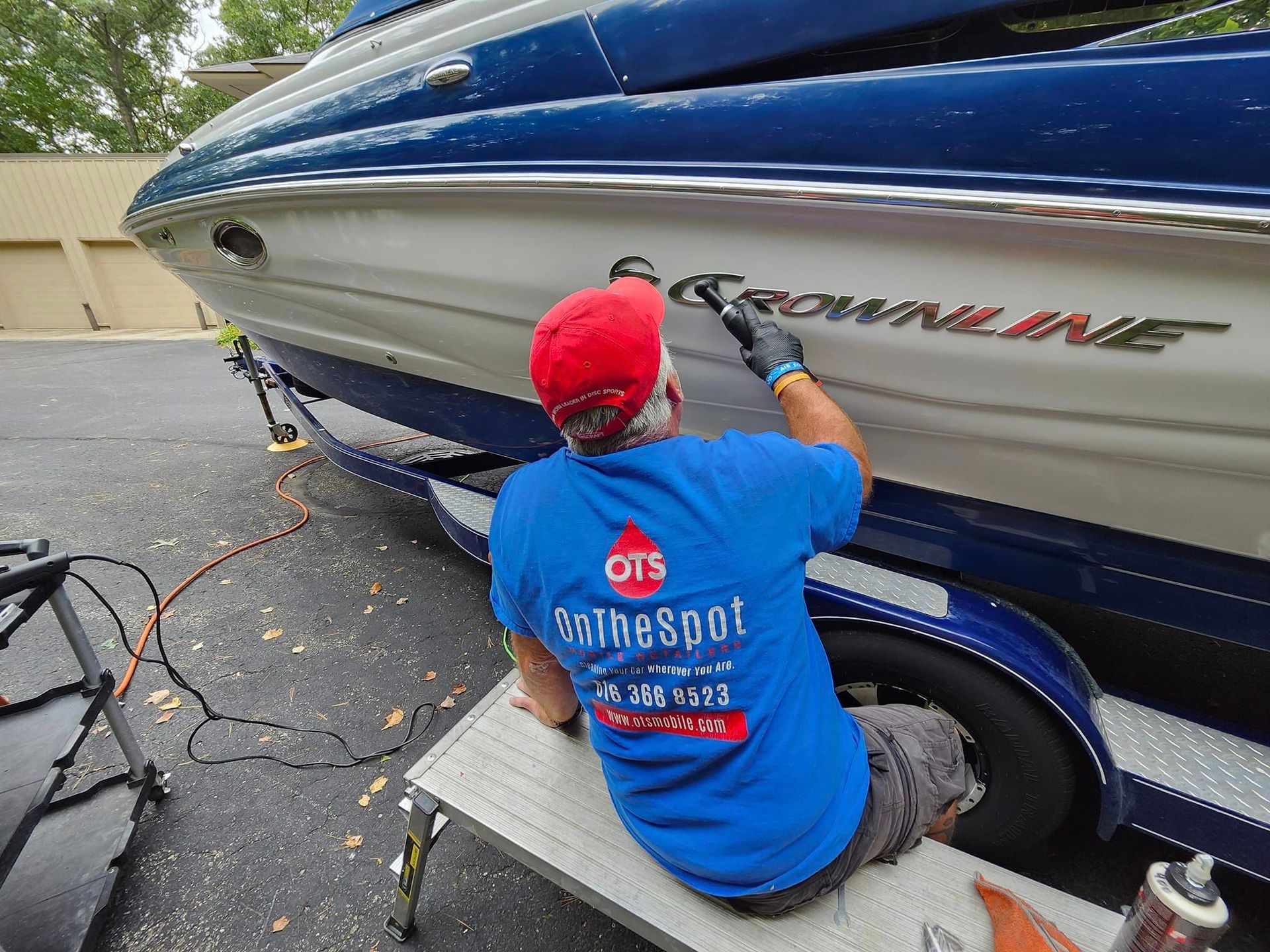
I watched On the Spot Mobile Detailers tackle a mid‑size center console boat that lived uncovered near brackish water. The hull chalked white, stainless showed tea staining, and non‑skid held years of grime. They staged the job into two visits, a necessity when sun and tide dictate shade and footing. Day one, they cut the gelcoat with a wool pad and a heavy marine compound, working in small sections and wiping residue before it crusted. Day two, they polished, treated metal, deep‑cleaned vinyl with a pH‑appropriate cleaner and soft brush, and sealed the lot with a marine polymer. The owner opted to revisit with a ceramic coating later. The result wasn’t just shine; rinse‑downs took minutes instead of hours because water didn’t cling to pores.
On an RV, I’ve seen their team sequence a roof inspection, trim cleaning, and sidewall correction to avoid dripping cleaners down finished panels. That order shows up in their packages as a note, not a bold promise, and it makes a difference in streak‑free results.
Residential coating and when it makes sense
The phrase residential coating crops up in mobile menus to distinguish coatings applied at a home or driveway from those done in a dedicated studio. The chemistry can be identical, but application logistics differ. Outdoors, wind and dust control become part of the plan, and flash times change with temperature and humidity. A realistic residential coating package builds in panel wipes, tack time checks, and the patience to coat fewer panels simultaneously. If your garage shields well and offers stable temperatures, a mobile team can deliver pro‑grade ceramic results at home. When conditions fight the chemistry, a good operator will steer you to a shop day rather than force the issue.
How to read package language without a decoder ring
Detailing menus use familiar words for different things. A few translations help you match expectations.
- Wash and wax: Often a safe wash with a spray wax or sealant topper. Rarely a paste wax these days. Good for gloss and short protection. Full interior: Vacuum, wipe down, glass, light stains. Heavy stains, pet hair, and biohazard cleanup sit outside that umbrella. Clay and seal: Mechanical decon followed by a sealant. Good for smoothness, but may micro‑mar softer paints without a polish step. One‑step polish: A single machine step to remove light swirls and oxidation. Expect improved gloss and moderate defect removal. Ceramic coating: Ask about the prep steps and product type. A real coating gets its own block and care instructions.
That’s the second list. Two lists total, and we’re at our limit.
Headlight restoration done the right way
Headlights yellow and haze because the factory UV coating fails, not just because grime accumulates. Wiping with compound can brighten them for a week, but the haze returns quickly without a UV‑stable finish. A correct restoration steps through sanding grits to level the failing layer, polishes to clear, then applies a durable UV coating or film. Mobile techs manage masking and dust in the driveway, which takes time and discipline. It’s one of the most satisfying 60 to 90‑minute add‑ons because it visibly modernizes a car and improves safety at night.
Why wheel and tire work deserves its own attention
Brake dust is corrosive, heat‑baked, and happy to etch clear‑coated wheels. Standard mobile detailing packages that treat wheels first prevent cross contamination, but technique and chemistry make the difference. Acidic cleaners bite fast but can damage bare aluminum. pH‑balanced iron removers are safer and, when given a few minutes to work, dissolve most bonded dust. Barrel brushes and soft face brushes reach spokes and calipers. Tires respond best to a real degreaser scrub until the foam turns from brown to white, then a water‑based dressing laid thin. That sequence is the difference between wheels that look new for weeks and wheels that haze again by Monday.
Wheel coating lives in the value‑for‑effort sweet spot if you keep a car long term. Once coated, most dust rinses off, and touchless cleans become practical in winter when you’d rather not hand wash in the cold.
Mobile constraints that separate pros from the pack
Detailing, especially mobile detailing, is logistics. A pro arrives with deionized or softened water when spots are a risk, or they pivot to rinseless techniques and shade. They bring duplicate mitts, pads, and towels because a dropped towel on gravel is a sandpaper pad. They manage power draw for polishers and extractors on a home circuit without tripping breakers, or they use quiet generators positioned to keep exhaust away from the work.
Dry time is a quiet, critical piece. Interiors need airflow. On a humid day, doors open aren’t enough. Fans, cracked windows, and sequencing the wettest work early in the visit help. For coatings, a mobile tech protects fresh layers from dew and sprinklers, sometimes with temporary tents or by planning morning starts. Those considerations never make it into bullet points but they shape outcomes.
Matching packages to how you actually use the vehicle
Choose car detailing packages based on use, not just the calendar. A garage‑kept weekend car with careful washes can ride on a light maintenance detail and a topper every few months, with a one‑step polish annually. A highway commuter parked under trees benefits from a mid‑tier exterior with iron decon and a stronger sealant each season, plus a cabin air filter check and interior dressing with UV resistance. Families with car seats and sports gear need extraction and interior coating on high‑touch plastics more than they need an exhaustive engine bay.
For marine detailing, schedule heavy correction and protection before the peak season, then lighter maintenance washes and spray sealants between trips. RVs deserve a spring reset and an end‑of‑season wash and protection to avoid winter oxidation creep. Paint correction is a periodic reset, not a biweekly expectation.
When to step up to paint correction and coating
If you inspect your car in harsh light and see halos and spiderwebs, a one‑step polish will likely satisfy you. If you see isolated deeper marks, water spot etching, or flatness in the paint that no wash cures, a two‑step correction aims higher, provided the paint thickness supports it. Coatings make the most sense after a panel is as clear as you want it, because they lock in whatever is there. Coating over defects can still look good in shade, but bright sun or LEDs will show you the truth. A realistic package will suggest correction before ceramic coating, not because it pads the ticket, but because it preserves the point of a durable finish.
A note on safety, materials, and honest limits
Mobile detailers work around children, pets, gardens, and neighbors. Safe chemical selection and runoff control are part of the job. Waterless and rinseless washes, when used correctly, minimize runoff without sacrificing safety. Acidic wheel washes have their place, but on sealed driveways near plant beds, pH‑neutral options are wiser. Steam is a powerful interior tool, but not near delicate screens or unstabilized wood trim. A good package discloses those boundaries and asks questions about sensitive areas like matte paint, satin vinyl wraps, or dealer‑installed paint protection film. Each surface changes the plan. Matte paint, for instance, should never be polished for gloss. It requires specialized cleaners and sealants.
What you should expect after the van leaves
After a quality mobile detailing visit, you should have more than a glossy car. You should have a short care brief that matches what was installed. If you received a ceramic coating, you’ll be told not to wash with detergents for a set cure period, to avoid sprinklers, and to use a pH‑neutral soap thereafter. If fabric was coated, you’ll learn how spills behave and that blotting beats rubbing. If headlight restoration included a coating, you’ll understand why automatic car washes with harsh chemicals are a poor idea for a week.
On the Spot Mobile Detailers leaves simple maintenance notes, and they follow up after a day or two on first‑time ceramic jobs to catch any high spots that escape in driveway lighting. That small gesture saves customers from living with a smudge that only appears at 5 p.m. when the sun hits the fender. It’s the kind of operational habit that distinguishes conscientious mobile teams.
Bringing it together without the hype
Mobile detailing packages are just structured promises. The right one for you lines up with your paint’s condition, your climate, and how you use the vehicle. A base tier should reset and protect without introducing new defects. A mid tier should decontaminate and add short to medium protection that makes the next wash easier. A premium tier should correct and coat where it counts, with honest conversations about what can and cannot be fixed. Add‑ons like headlight restoration, interior coating, wheel coating, and paint correction are best used as tools to solve real problems, not ornaments on a menu.
If you browse providers, read past the headline and look for sequencing, not just lists of chemicals. The teams that respect process deliver consistent results in unpredictable environments. Whether your focus is car detailing for a daily driver, marine detailing for a boat that sees salt, RV detailing after a long summer loop, or that first ceramic coating on a new purchase, the same discipline applies. Find the package that reflects it, ask a couple of pointed questions about prep and protection, and your driveway appointment will feel like a smart use of time rather than a gamble.